Cinema Seminar:
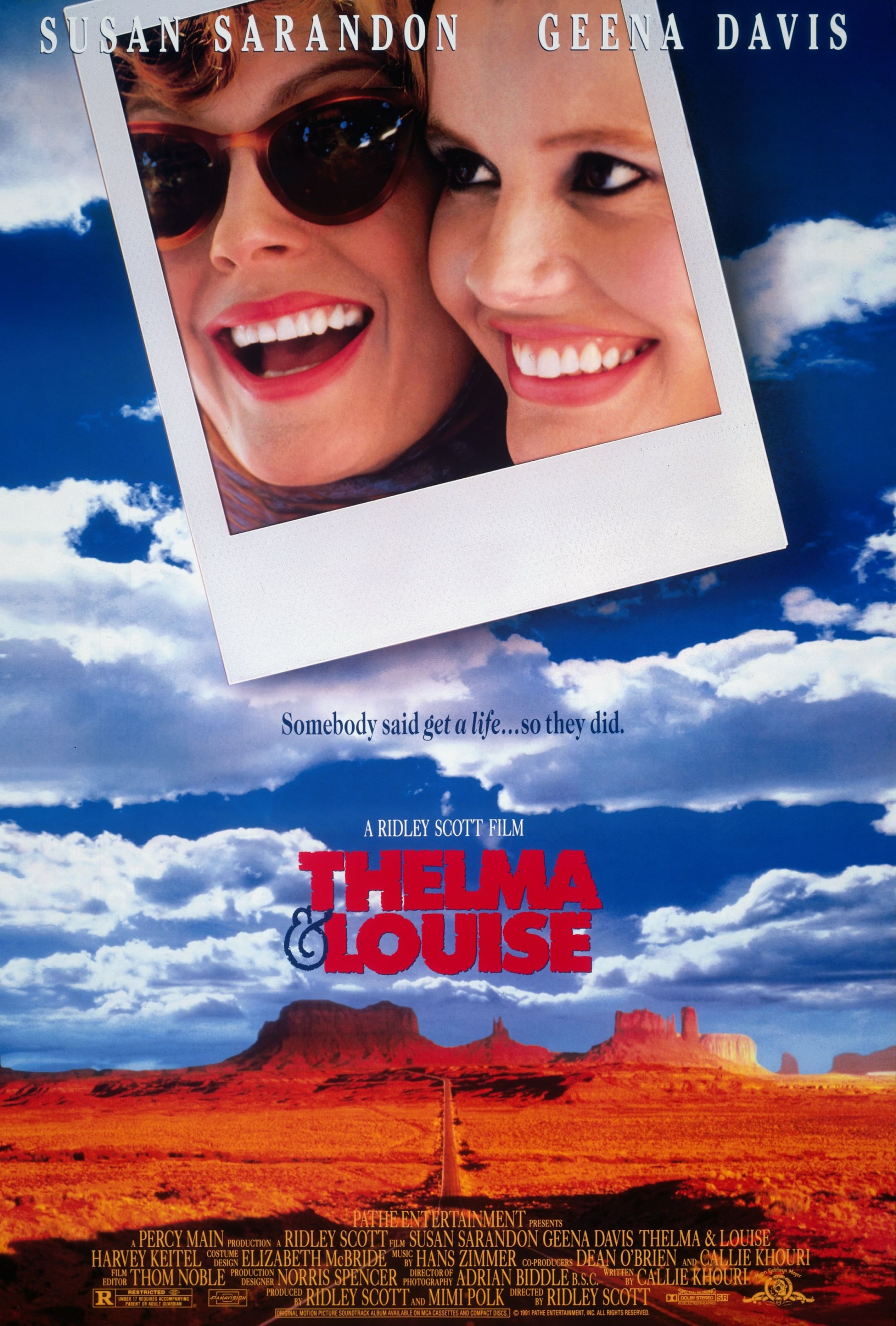
Thelma & Louise

Frustrated by the limited and sexualized roles for women on screen in the 1980s, first-time screenwriter Callie Khouri imagined two women, pushed to their limits, who go on the run. Her idea finally came to life with the help of Ridley Scott (Alien), who at first seemed an unlikely choice to direct, but was intrigued by the story’s new perspective on the mythic American West. The casting of Susan Sarandon and Geena Davis, who created indelible characters that are now icons of female friendship, was the last key ingredient in the creation of a landmark work.
Thelma & Louise (1991) harnesses the evocative power of the West as a landscape that represents freedom from social constraints, through iconography like the open road and the slide-guitar soundtrack. But in this film, it takes on new resonance by foregrounding female experiences of marginalization and abuse. The heroines’ journey sees them transform from traditional female characters hemmed in by the bounds of conventional femininity into bold outlaws who chart their own course and are determined to live on their own terms.
The film’s release was, as one journalist put it, “so combustible and controversial, coming as it did at a fulcrum moment in women’s history in the United States.” Thelma & Louise’s timeliness would only grow over the following months, which saw the publication of Susan Faludi’s award-winning Backlash: The Undeclared War Against American Women and Anita Hill’s testimony against Clarence Thomas, among other developments.
Critics and audiences alike debated what kind of feminism the film represented, as well as the message of its ending. Join us to continue those conversations, as well as to explore Thelma & Louise’s relationship to the Western and the road film, and its lasting impact on American society.